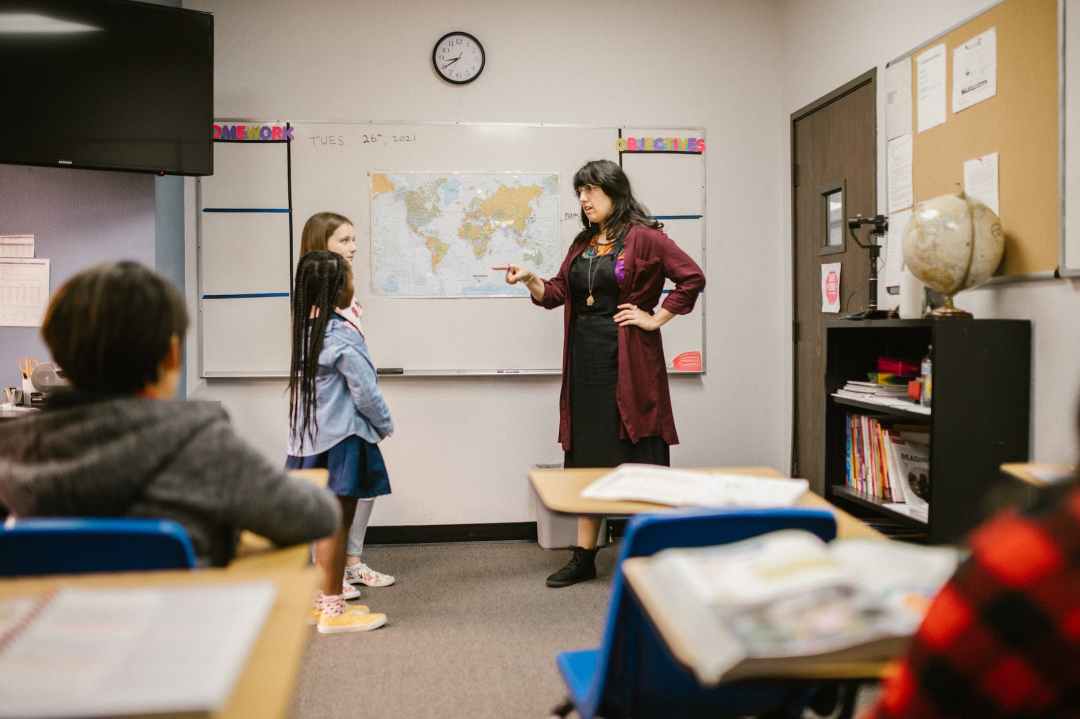
Social Emotional Learning, or “SEL,” is a hot topic that is quickly finding its way into public schools across the country. The Ohio Board of Education adopted SEL standards for Ohio schools in 2019 and they can be found on the state website. While the standards exist, it is optional for schools to participate in SEL programming. Oakwood City Schools began an SEL program in 2021 with the hiring of Amy Samosky and Bridget Fiore. The schools have a website dedicated to the SEL program, and the SEL team has been building out the program along with e-mails to parents and presentations to Oakwood teachers during professional development sessions. The SEL presentation for the August 2022 professional development training can be found at this link – https://oakwoodstrongschools.com/wp-content/uploads/2022/09/2022-08-understanding-sel-high-aims-conference.pdf.
As noted in the recent presentation, SEL is described in this way:

There are potential aspects of SEL programs that would strengthen resilience in troubled youth when implemented in a one-on-one setting with qualified therapists. However, there are legitimate concerns with the implementation of the program, which takes time away from instruction in the classroom while encouraging teachers to engage in group therapy for which they are not trained and licensed. SEL is described as a way of setting up an educational environment based on core values and positive relationships, but these core values and positive relationships are subjective in nature, and necessarily delve into childhood identity – topics that are the purview of parents, not the schools. The schools previously utilized the 40 Developmental Assets, which had clearly defined principles that all in our community could review and understand, while SEL programming has markedly less definition for its goals.
SEL is described as the process through which children and adults acquire and effectively apply the knowledge, attitudes, and skills necessary to understand and manage emotions, set and achieve positive goals, feel and show empathy for others, establish and maintain positive relationships, and make responsible decisions (CASEL, 2008). This sounds idealistic, and within the common human experience, the family is the setting in which these types of life skills are developed within a common bond and moral framework. One concern is that the schools are overstepping their authority by not acknowledging the primacy of parents as educators and moral authorities for their children. It is interesting to note that parents are not even mentioned in the 18-page Ohio SEL standards documents. The public school “values” will necessarily be overly simplified and unable to accommodate the diverse religious and ethnic backgrounds of our community, yet the schools propose to inculcate their poorly defined values nonetheless in a school setting. Many parents have questioned the need to apply SEL to all children when perhaps the resources could be focused on those troubled children most in need of assistance.
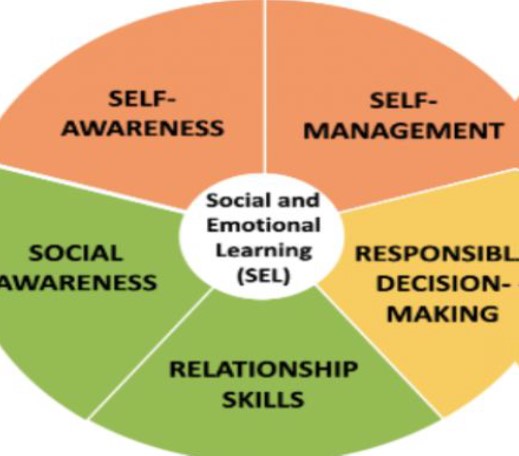
SEL identifies five core competencies as the basis of its program, including self-awareness, self-management, social awareness, relationship skills, and responsible decision-making. Self-Awareness includes positive features such as self-confidence and understanding of one’s strengths, while it also includes concepts like accurate self-perception. There are members of our community, including some teachers and counselors in our schools, who believe that children should be encouraged to embrace alternative gender identities, such as girls identifying as boys, as “non-binary,” or other categories. In this case, the identity is not an accurate self-perception, but rather a misperception that creates confusion in a young person struggling with the challenges many will encounter while growing up. Encouraging gender confusion in a classroom and therefore a public setting sets up a situation where social pressure encourages conforming to the promoted behavior, whereas treatment within a private setting allows for a healthy assessment of the underlying emotional challenges. Has the board of education and the school administration considered these complexities as they roll out this SEL program? The implementation of a program in this manner opens the schools to potential long-term legal liability should the SEL program run afoul of parental sensibilities.
The competency of Social Awareness includes topics such as perspective taking, empathy, appreciating diversity, and respecting others. At a high level, these topics are admirable features of our modern society that must be tied to the truth about ourselves and the world. The family is the place where these issues and their moral considerations are meant to be engaged. The schools usurp the role of the family when they choose to define these terms for our children and do so in a group setting. For example, how is diversity defined? Does it include intellectual diversity, or is diversity defined as mandatory approval of identity groups in racial and sexual terms? “Diversity” in a critical theory framework means you are speaking critically from the perspective of your marginalized group as defined by concepts like intersectionality. Oakwood has promoted professional development opportunities for Equity, Diversity, and Inclusion programs that utilize this precise approach, and the SEL materials have not clearly defined the guidelines required to understand how this aspect of SEL will be implemented.
Empathy is a concept that is emotion-based and offers the opportunity for emotional manipulation. Empathy is the leverage point within SEL where the teacher, as an authority figure, is positioned to tell children how they are supposed to feel in situations that are designed to elicit emotional responses. This Socratic approach guarantees that the questions asked will lead to the answer desired by the teacher, who may pose scenarios and solutions that do not align with values at home. What guidelines are in place to bound the appropriate topics used in SEL discussions? What is the policy regarding parental rights and inclusion in this activity? If a controversial topic is brought up in SEL, are students being compelled to answer in a certain way that amounts to compelled speech and may violate the 1st Amendment rights? Finally, and most importantly, is there really a fundamental lack of desirable character traits in Oakwood children that dictates the need for a program like this administered by teachers to every child in the district?
Responsible Decision Making includes the topic of ethical responsibility and provides a final example for the discussion at hand. Ethics and morals are first learned at home within the family, and this leads to the maturation of a child’s conscience over time aligned to a family’s values. A school system could teach universal principles in line with our American liberal tradition, yet the SEL program does not specifically define the principles to which it subscribes. Who is the arbiter of what is considered ethical in the context of the schools? Why is this information not posted publicly and disseminated so that parents can be aware of what their children are being told in the schools? Where is the line between the right of individual and parental conscience, closely tied to the prohibition of state establishment of religion, and permissible indoctrination of children?
SEL started as a concept for helping troubled children in a therapeutic setting with trained counselors and it is now being applied to our children in group settings in every subject of study, an “all-day process of interactions.” While some studies have shown the effectiveness of SEL as an intervention for troubled youth, it is now being applied on a much wider scale by teachers who are not licensed for group psychological counseling. SEL opens our children to peer pressure and struggle sessions if they feel that they are in the minority on a particular topic of discussion. Topics will invariably be designed to elicit emotional discomfort and provide the answer to the emotional discomfort as the approved solution. This manipulative approach applied to innocent children provides a state-sponsored avenue of abuse and violation of the rights of children and their parents to use their individual conscience. All of this is being done without explicit parental or child consent and foreknowledge, and parents have the primary responsibility of raising their children according to their sincerely held beliefs which are protected by the constitution.
Are you interested to learn more about SEL? James Lindsay has several interesting commentaries on his website, New Discourses. These are deep dives into detailed journal articles that cover what SEL is meant to accomplish through the writings of the advocates of SEL themselves. We’ll cover some additional aspects of SEL in a future post. In the meantime, please send us a note with your thoughts or sign up for e-mail updates at admin@oakwoodstrongschools.com.
 OCSS
OCSS 
One thought on “Oakwood SEL Program – Unanswered Questions”