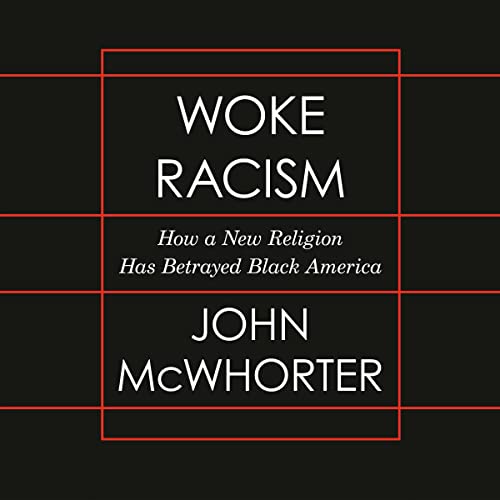
Racism has received a renewed focus in recent years with a religious fervor in certain sectors of the culture and a particular interest in Equity, Diversity, and Inclusion (EDI) programs. This has been witnessed here in Oakwood, most especially on social media, with a particular enmity reserved for those who have questions about the specific details of EDI initiatives. Woke Racism, by Columbia professor, John McWhorter, aims to shed light on the fanaticism that we are witnessing and provide a voice of sanity for those confused by the claims of the racial equity movement.
McWhorter begins his work by defining “Third Wave Antiracism,” which in its current form “teaches that because racism is baked into the structure of society, whites’ “complicity” in living within it constitutes racism itself, while for black people, grappling with the racism surrounding them is the totality of experience and must condition exquisite sensitivity toward them, including a suspension of standards of achievement and conduct.” Proponents of this view include popular authors such as Ibram X. Kendi (How to Be An Antiracist; Anti-Racist Baby) and Robin DiAngelo (White Fragility), which can easily be found in a library near you. This new form of antiracism includes a variety of self-contradictory dogmas which are difficult to justify upon closer review. It is demanded of our society that we embrace and celebrate multiculturalism, while at the same time we are told that cultural appropriation is a grave sin. Regarding crime rates in inner cities, we are told that “black people cannot be held accountable for everything every black person does,” while also being told that, “All whites must acknowledge their personal complicitness in the perfidy of “whiteness” throughout history.” Kendi promotes outright discrimination in favor of blacks, while rejecting the merit-based system of capitalism that has lifted millions from poverty over the last century. A critical part of the toolbox of this movement is to instill a sense of racial guilt and desire for atonement. Another is to call all with whom they disagree a racist, which is of course the one thing that Americans are most fearful of being named. Thus, it is a movement based upon gaining political power through use of guilt and fear, and the question is whether or not this approach will ultimately work.
Given that this modern movement has taken on aspects of religious faith, McWhorter explores parallels with other religions. Those who adhere to this new religion are deemed the Elect, as they see themselves as having great insights and wisdom, greater empathy, and as having been chosen for spreading the word of antiracism. They have their own version of original sin, which is posed as “white privilege.” One can acknowledge their privilege, but in this religion, you are never truly able to receive absolution, even as you “do the work” of spreading the antiracist gospel. Questioning the validity of the claims and/or proposed solutions of this regime is seen as a form of heresy that must be quashed, as can be seen from the social media mobs that occur from time to time. Be sure not to cross this crowd, lest they find you “problematic” and unaware of your grave microaggressions!
Ultimately, the danger of this movement is that it hurts black people it purports to aid while spreading division and animosity among our community. In the name of equity, some districts have reduced or even eliminated detentions for black students because the number of black students receiving detentions was higher than other racial groups. While the Elect would pose that this is the result of some form of discrimination, the result of the policy change is more class disruptions and the bigotry of low expectations for youth who need to be called to self-control that leads to a more fruitful life. Other districts have lowered standards by racial category or reduced the number of honors programs to yield a more equitable outcome, cheating all students of the opportunity to excel. Finally, “On racism, Elect philosophy teaches black people that cries of weakness are a form of strength. It teaches us that in the richness of this thing called life, the most interesting thing about you is that the ruling class doesn’t like you enough. It teaches us that to insist that black people can achieve under less than perfect conditions is ignorant slander. It teaches us that we are the first people in the history of the species for whom it is a form of heroism to embrace the slogan “Yes, we can’t!””
What does Woke Racism pose as the solution to this incoherent and belligerent religious view? The Elect are essentially a mob, largely unreachable as they cry wolf about this policy or that with their irrational demands. We need to point out that this is not normal behavior and treat it as such. Ultimately it may be best to ignore and walk away as they are not interested in a dialogue. They are zealots for their cause and will not listen to reasonable arguments. Their approach is meant to undermine your moral authority and your confidence. These feelings must be resisted to continue to advocate for common sense positions that ultimately will provide better lives for our children. We must have the confidence to say “no” when they call us racists in an effort to shut down debate. There is no reason we should be required to accept the labels thrown at us and even fewer reasons to accept the tenants of the woke racists of our day.
Hopefully this summary of Woke Racism has provided some insight into a portion of the woke agenda of our day. In closing, John McWhorter offers us these encouraging words:
“Be Spartacus. It is natural to fear going up against the parishioners who so fervently disagree, with their ten – dollar words and artful sarcasm and air of surety. But I promise you: There is room in this society for speaking the truth and living to tell about it.”
If you want to join our community as we discuss these topics and work toward a place where ideas are respected and discussed on their merits, come on over and join our Facebook group at Oakwood Community for Strong Schools.
 OCSS
OCSS 