KIDS AND GENDER – WE HAVE TO (BE ABLE TO) TALK ABOUT IT
For the Boston Globe, Lisa Selin Davis writes that “we on the left need to be able to scrutinize and talk about what schools and the broader culture are teaching our kids about sex and gender without being dismissed as hateful,” and that “silencing critiques, debate, and science…[is not] actually good for children, whether or not they are gender-atypical.”
USAF ACADEMY INSTRUCTION: NIX ‘GENDERED’ WORDS LIKE ‘MOM’
The Washington Examiner reports that the U.S. Air Force Academy’s diversity and inclusion training reportedly instructs cadets to avoid using “gendered” words like “mom and dad.” “Some families are headed by single parents, grandparents, foster parents, two moms, two dads, etc.: consider ‘parent or caregiver’ instead of ‘mom and dad,’” the training reportedly states. “Use words that include all genders: ‘Folks’ or ‘Y’all’ instead of ‘guys’; ‘partner’ vs. ‘boyfriend or girlfriend.’”
CALIFORNIA SCHOOL WITH SOCIAL JUSTICE ACADEMY HAS 19% MATH PROFICIENCY
The Daily Wire reports that the San Leandro High School has a social justice academy dedicated to gender and ethnic studies, intersectionality, and social and emotional skill development oriented toward activism while failing to teach its students basic math, science, and reading skills.
Sens. Marsha Blackburn, R-TN, and Cynthia Lummis, R-WY, sent a letter to the Food and Drug Administration (FDA) pressing the federal agency to provide data on the effects of a puberty-inhibiting drug recently warned about by some medical experts. The drug is designed to inhibit the onset of puberty in children with a rare condition that causes puberty to come dangerously early. But the practitioners of “trans medicine” administer the drug to physically healthy minors.
An 18-year-old woman is rapidly becoming one of the most powerful voices against “transitioning” children at a moment when most politicians and media outlets lack the courage to speak out. Chloe Cole is a self-described “former trans kid” who de-transitioned after undergoing years of puberty blockers and an irreversible double mastectomy at the age of 15. Read what Cole has to say in this courageous interview with the Catholic News Agency.
Here Chloe Cole shares her experience and warns that young children are being exploited by the trans movement.
HELPING GEN Z TO FLOURISH
Loneliness, epidemic depression, and suicide are on the rise among Gen Z. But there are three things that make actual, measurable differences: adults, religion, and Scripture. How does our Oakwood community engage our youth to help them tackle the challenges of life? This article gives some suggestions.
Social Emotional Learning, or “SEL,” is a hot topic that is quickly finding its way into public schools across the country. The Ohio Board of Education adopted SEL standards for Ohio schools in 2019 and they can be found on the state website. While the standards exist, it is optional for schools to participate in SEL programming. Oakwood City Schools began an SEL program in 2021 with the hiring of Amy Samosky and Bridget Fiore. The schools have a website dedicated to the SEL program, and the SEL team has been building out the program along with e-mails to parents and presentations to Oakwood teachers during professional development sessions. The SEL presentation for the August 2022 professional development training can be found at this link – https://oakwoodstrongschools.com/wp-content/uploads/2022/09/2022-08-understanding-sel-high-aims-conference.pdf.
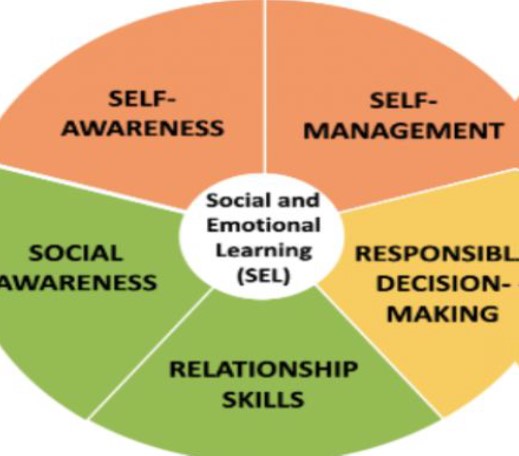
As noted in the recent presentation, SEL is described in this way:
There are potential aspects of SEL programs that would strengthen resilience in troubled youth when implemented in a one-on-one setting with qualified therapists. However, there are legitimate concerns with the implementation of the program, which takes time away from instruction in the classroom while encouraging teachers to engage in group therapy for which they are not trained and licensed. SEL is described as a way of setting up an educational environment based on core values and positive relationships, but these core values and positive relationships are subjective in nature, and necessarily delve into childhood identity – topics that are the purview of parents, not the schools. The schools previously utilized the 40 Developmental Assets, which had clearly defined principles that all in our community could review and understand, while SEL programming has markedly less definition for its goals.
SEL is described as the process through which children and adults acquire and effectively apply the knowledge, attitudes, and skills necessary to understand and manage emotions, set and achieve positive goals, feel and show empathy for others, establish and maintain positive relationships, and make responsible decisions (CASEL, 2008). This sounds idealistic, and within the common human experience, the family is the setting in which these types of life skills are developed within a common bond and moral framework. One concern is that the schools are overstepping their authority by not acknowledging the primacy of parents as educators and moral authorities for their children. It is interesting to note that parents are not even mentioned in the 18-page Ohio SEL standards documents. The public school “values” will necessarily be overly simplified and unable to accommodate the diverse religious and ethnic backgrounds of our community, yet the schools propose to inculcate their poorly defined values nonetheless in a school setting. Many parents have questioned the need to apply SEL to all children when perhaps the resources could be focused on those troubled children most in need of assistance.
The Five SEL Core Competencies
SEL identifies five core competencies as the basis of its program, including self-awareness, self-management, social awareness, relationship skills, and responsible decision-making. Self-Awareness includes positive features such as self-confidence and understanding of one’s strengths, while it also includes concepts like accurate self-perception. There are members of our community, including some teachers and counselors in our schools, who believe that children should be encouraged to embrace alternative gender identities, such as girls identifying as boys, as “non-binary,” or other categories. In this case, the identity is not an accurate self-perception, but rather a misperception that creates confusion in a young person struggling with the challenges many will encounter while growing up. Encouraging gender confusion in a classroom and therefore a public setting sets up a situation where social pressure encourages conforming to the promoted behavior, whereas treatment within a private setting allows for a healthy assessment of the underlying emotional challenges. Has the board of education and the school administration considered these complexities as they roll out this SEL program? The implementation of a program in this manner opens the schools to potential long-term legal liability should the SEL program run afoul of parental sensibilities.
The competency of Social Awareness includes topics such as perspective taking, empathy, appreciating diversity, and respecting others. At a high level, these topics are admirable features of our modern society that must be tied to the truth about ourselves and the world. The family is the place where these issues and their moral considerations are meant to be engaged. The schools usurp the role of the family when they choose to define these terms for our children and do so in a group setting. For example, how is diversity defined? Does it include intellectual diversity, or is diversity defined as mandatory approval of identity groups in racial and sexual terms? “Diversity” in a critical theory framework means you are speaking critically from the perspective of your marginalized group as defined by concepts like intersectionality. Oakwood has promoted professional development opportunities for Equity, Diversity, and Inclusion programs that utilize this precise approach, and the SEL materials have not clearly defined the guidelines required to understand how this aspect of SEL will be implemented.
Empathy is a concept that is emotion-based and offers the opportunity for emotional manipulation. Empathy is the leverage point within SEL where the teacher, as an authority figure, is positioned to tell children how they are supposed to feel in situations that are designed to elicit emotional responses. This Socratic approach guarantees that the questions asked will lead to the answer desired by the teacher, who may pose scenarios and solutions that do not align with values at home. What guidelines are in place to bound the appropriate topics used in SEL discussions? What is the policy regarding parental rights and inclusion in this activity? If a controversial topic is brought up in SEL, are students being compelled to answer in a certain way that amounts to compelled speech and may violate the 1st Amendment rights? Finally, and most importantly, is there really a fundamental lack of desirable character traits in Oakwood children that dictates the need for a program like this administered by teachers to every child in the district?
Responsible Decision Making includes the topic of ethical responsibility and provides a final example for the discussion at hand. Ethics and morals are first learned at home within the family, and this leads to the maturation of a child’s conscience over time aligned to a family’s values. A school system could teach universal principles in line with our American liberal tradition, yet the SEL program does not specifically define the principles to which it subscribes. Who is the arbiter of what is considered ethical in the context of the schools? Why is this information not posted publicly and disseminated so that parents can be aware of what their children are being told in the schools? Where is the line between the right of individual and parental conscience, closely tied to the prohibition of state establishment of religion, and permissible indoctrination of children?
SEL started as a concept for helping troubled children in a therapeutic setting with trained counselors and it is now being applied to our children in group settings in every subject of study, an “all-day process of interactions.” While some studies have shown the effectiveness of SEL as an intervention for troubled youth, it is now being applied on a much wider scale by teachers who are not licensed for group psychological counseling. SEL opens our children to peer pressure and struggle sessions if they feel that they are in the minority on a particular topic of discussion. Topics will invariably be designed to elicit emotional discomfort and provide the answer to the emotional discomfort as the approved solution. This manipulative approach applied to innocent children provides a state-sponsored avenue of abuse and violation of the rights of children and their parents to use their individual conscience. All of this is being done without explicit parental or child consent and foreknowledge, and parents have the primary responsibility of raising their children according to their sincerely held beliefs which are protected by the constitution.
Are you interested to learn more about SEL? James Lindsay has several interesting commentaries on his website, New Discourses. These are deep dives into detailed journal articles that cover what SEL is meant to accomplish through the writings of the advocates of SEL themselves. We’ll cover some additional aspects of SEL in a future post. In the meantime, please send us a note with your thoughts or sign up for e-mail updates at admin@oakwoodstrongschools.com.
IDAHO OFFICIALS PARTNER WITH PORN GROUP IN SCHOOLS
Idaho’s Department of Health and Welfare offers an optional sex education program for schools statewide created by the organization “ETR.” The “Reducing the Risk” program is set to be fully implemented in schools this fall. The Idaho Freedom Foundation uncovered that ETR also advocates for teaching elementary students about “porn literacy,” and seeks to teach kids about “kink and power, pleasure, sexual identity, sexual acts, and sexual exploration in relation to pornography.”
Virginia Republican Gov. Glenn Youngkin on Friday updated “model policies” regarding the treatment of “transgender” students, claiming that the previous “guidelines disregarded the rights of parents.” The new policies stated that the old ones “promoted a specific viewpoint aimed at achieving cultural and social transformation in schools.”
TEACHERS UNION PROMOTES INAPPROPRIATE SEXUAL HOW-TO GUIDE
From Chris Rufo: The national teachers union’s “LGBTQ+ Caucus” has created a website and badge for public school employees that promote non-binary identities, a how-to guide for “queer sex,” and the idea that “transgender men can get pregnant. This was in Hilliard School District near Columbus, OH!
A groundswell of lawmakers are demanding an investigation into a Nashville pediatric gender clinic after shocking videos showed a doctor calling certain transgender surgeries “huge money-makers” and a health law expert saying “religious” conscientious objections to the surgeries are “problematic.” The Pediatric Transgender Clinic at Vanderbilt University Medical Center performs “gender-affirming” double mastectomies on minor girls and offers puberty blockers and cross-sex hormones for minors as well, according to an exposé from The Daily Wire’s Matt Walsh.
For Inside Higher Ed, Eboo Patel offers a “plea to those educators who will shape [the] lives and careers” of incoming students to institutions of higher learning: “teach your students to be builders, not critics.”
“Critical Race Theory questions the very foundations of the liberal order, including equality theory, legal reasoning, Enlightenment rationalism, and the neutral principle of constitutional law” – Richard Delgado and Jean Stefanic
Critical Race Theory, An Introduction
Critical Race Theory (CRT) has been developing for over 40 years and can be viewed in terms of theory and praxis (how it is applied in society, including in K-12 schools). CRT rejects the modern liberal order and the traditional civil rights movement. They reject the “color blindness” best summarized in Martin Luther King’s “I Have a Dream” speech. CRT advocates wish to transform society through the leverage of societal power, rejecting aspects of our culture such as racial integration and unifying American values, which they perceive to be aspects of White supremacy or White values. A key aspect of CRT is the incorporation of Marxist identification of oppressed and oppressor classes, where minorities of color are cast in the role of the proletariat and White culture is cast as the bourgeoisie. CRT is an activist movement, by design, seeking to invigorate the casting off of our cultural institutions.
“Critical Race Theory reformulates the old Marxist dichotomy of oppressor and oppressed, replacing the class categories of bourgeoisie and proletariat with the identity categories of White and Black”
Christopher Rufo
CRT has a number of principles that have been developed over time and infused into resources and curriculum for K-12 schools. These principles include:
Color-consciousness: Proponents of CRT reject the idea of color-blindness and see all aspects of society through the lens of skin color. This is the opposite of the key approach of Martin Luther King and the civil rights movement. Color consciousness can be seen in districts on the coasts where racial quotas are being applied to boost certain racial groups in honors classes. Some districts have eliminated honors programs in order to create a more equitable outcome.
Cultural separatism: CRT rejects the idea of integration into a common American culture, a culture which they pose as a “White dominant” culture. This is the opposite of the civil rights movement of the 1960s, which emphasized our common humanity and pushed our nation to embrace all races within this culture of freedom. Ibram X. Kendi’s book, How To Be An Antiracist, separates everyone into “racists” and “anti-racists.” In the summer of 2020, there was an example of this at the Smithsonian’s National Museum of African American History, which produced a pamphlet claiming that hard work, rational thinking, politeness, and the nuclear family were all aspects of “Whiteness and White Culture.”
Opposition to Whiteness: Because of the rejection of “White culture” as noted above, Black culture must resist, challenge, and disrupt “Whiteness.” There are a number of documented examples of training sessions for businesses and teachers that promote the idea of “Disrupting Whiteness.” Some schools have begun to remove classic works, such as Shakespeare, as a move to remove white literature and shift the culture.
Emphasis on systems: CRT rejects individual action and personal responsibility and focuses on “systems” and “structures” that must be changed to end inequities. Because of this belief, they reject values like hard work and meritocracy as elements that continue the status quo. This is essentially a rejection of the self-reliance, individualism, and personal responsibility upon which our nation was built. Many public schools are beginning to embrace this idea by rejecting “white privilege” and hosting speakers to discuss system injustices of varying types.
Embrace of Marxism: CRT heavily borrows from Marxist philosophy and rhetoric, posing racial or gender categories as the oppressed by society, while whiteness or heterosexuality is posed as the oppressor. This serves to motivate groups into activism. Many of these concepts were refined through the work of Paulo Freire’s Pedagogy of the Oppressed, which is a popular work in college education circles and has heavily influenced schools. Programs that look at group identity and intersectionality often are oriented toward defining layers of oppression and helping children to identify which category is a match for them.
Use of deconstruction: CRT uses rhetorical techniques and manipulation of language to deconstruct our common language and problematize traditions, culture, language, and values, to move discussion toward their political ends. This is why there is an endless stream of new terms, which seem to change by the minute. Robin DiAngelo and Ibram X. Kendi have worked to redefine the meaning of racism and anti-racism, for example. Equity is a great example of a term that seems to capture our culture’s interest in equality, but the subtle change comes with the CRT advocate’s desire to implement quotas or other policies to ensure equal outcomes despite the effort of students or adults in our society. Another great example is the inability of many on the political left to define the word, “Woman,” including a recent addition to the Supreme Court, Ketanji Jackson Brown.
Subjective truth: CRT embraces postmodern philosophy’s rejection of objective truth. This is a form of cultural relativism and is seen in discussions of “lived experience.” Terms like “culturally responsive teaching” can be found when looking for examples of this concept. Several school districts and some state departments of education have incorporated these concepts in the subjects like math, as Florida found in a review that showed word problems incorporating CRT based questions.
Political activism: The ultimate goal of this entire movement is political activism to undermine our society and political traditions. CRT and related critical theories will always push for political advocacy (sometimes peaceful and sometimes not) in pursuit of its goals. A great example of this is the effort by Black Lives Matter to develop curriculum for schools, including its goals that include “rejecting”disrupting the Western prescribed nuclear family” and embracing a variety of hard left-wing causes.
Once you understand these terms and the various techniques that are used by Critical Race Theory and its relatives, Gender Theory and Queer Theory, you can start to identify them in the culture around us and right here in our precious Oakwood Schools. If you see something in a homework or hear about a club pursuing CRT based activities, the Oakwood Community for Strong Schools would love to get your tips. You can e-mail us anytime at admin@oakwoodstrongschools.com.
This post is a summary of a great resource, Christopher Paslay’s A Parent’s Guide to Critical Race Theory. If you found this information helpful, please consider purchasing Mr. Paslay’s book and please share this site with a friend!
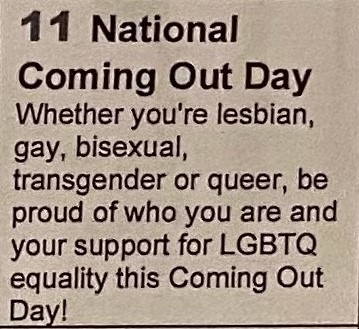
Our culture is awash in activist organizations pushing inappropriate materials and curricula into our K-12 schools. In the fall of 2021, the calendar in the photo above was sent home with all the kindergarten children at Oakwood’s Lange School. This calendar recommends that children who are 5-6 years old celebrate LGBTQ history month. It has references to National Coming Out Day and Intersex Awareness Day. For kindergartners!
National Coming Out Day Features Prominently in LGBT Calendar Sent Home from Lange School
The bad news is that groups across the country are putting out material like this. The good news is that it was discovered by a parent and brought to the attention of the Principal at Lange School, Frank Eaton. Principal Eaton was apologetic and assured parents that this was a surprise to him as well, as this calendar did not have this type of material on it before.
This is a great example of parents keeping an eye out for objectionable material and working with district leadership to protect our children. If you see something like this come home with your child, please send tips to Oakwood Community for Strong Schools. We can advocate on behalf of our kids and document these materials that are so prevalent in our culture. We can be reached any time at oakwoodstrongschools@protonmail.com and we have a link on every page to contact us or join our mailing list for updates.
Several years ago, Abigail Shrier (https://www.abigailshrier.com/), a writer at the Wall Street Journal, came across the story of the rising number of teenage girls making claims of transgenderism and other gender identities at high rates. Failing to find a colleague to investigate further, she rolled up her sleeves, interviewed hundreds, and in 2020 published the best selling investigation into the teen girl phenomena of rapid onset gender dysphoria, Irreversible Damage. Communities across our country are experiencing this explosion, which can be seen here in Oakwood as well. As Shrier notes, in 2007 there was a single gender clinic in the US, and today there are over 300 across our country. Some schools are seeing nearly 20-30% of the population claiming to be transgender or some other type of gender identity. What is driving this movement?
In a presentation to Hillsdale College students in May 2021, Shrier lays out the details of her investigation and detailed thoughts on the subject of her book. She notes that there are three distinct categories resulting from her investigation, which will be described through this post.
The first group to consider are the young children who do indeed experience gender dysphoria. Historically, this has been restricted to boys and men with clear clinical criteria to be met. This cohort is still quite rare, with 1 in 10,000 boys experiencing these feelings of discomfort with their bodies. This was typically treated through watchful waiting, and typically would be outgrown through puberty and the vast majority would live fruitful lives as their born sex. These children today are now offered puberty blockers such as Lupron, which can cause long term stunting of growth and sterility. Many suggest that affirmation is the only appropriate way to approach these children, yet there are no long term studies available to support this hypothesis.
A second group for consideration is the explosion of gender identity claims and transgender claims among young girls. This is a category that did not exist 10-15 years ago, but is expanding rapidly today (over 4,000% by some estimates). Scientists such as Lisa Litman of Brown University have proposed that this phenomena is a form of social contagion and calls this Rapid Onset Gender Dysphoria. This seems to occur among young girls who have moderate to high social anxiety and are susceptible to social contagions. Social media may be playing a significant role here, as several social scientists have sounded the alarm at the increase in depression among young girls as well. Trans identification often comes with the adulation of peers and authority figures such as parents, counselors, and teachers. Children can self-identify and are affirmed in this choice. But there is evidence mounting that this is not the path to long lasting happiness, with many “de-transitioners” speaking out about being deceived by the medical community, and in some instances court cases showing a massive failure to support kids who need genuine treatment for their mental health, and not just affirmation.
The third group is made up of the activists who exploit the groups above to suit their political and other agendas. An example of this are those who ban appropriate treatment of teens struggling with gender, or those who push to allow men to have access to women’s spaces, like sports, bathrooms, and even prisons. These groups will exaggerate medical claims, attack truth tellers who oppose them, and lie about suicide to create false compassion, demonize opponents, and claim the moral high ground. These people oppose freedom of speech and pursue power in order to push their agenda in every facet of our society.
This activist philosophy is promoted across our society by our government, the medical industry, media, and even in our schools. This top cover allows for a distortion of science and good medical practice. Those who oppose are told they are heteronormative oppressors or homophobic individuals and are not permitted to bring legitimate claims forward. The activists weaponize empathy at the risk of irreversibly damaging innocent children in our community.
If you would like to learn more and better understand what is going on in our culture and right here in Oakwood, then please consider listening to Abigail Shrier’s full presentation on YouTube.
A recent opinion piece in the Washington Examiner, In academia, support for diversity is very selective, describes the trend in diversity and inclusion programs that spread robustly across the country over the last few years. Professor Richard Vatz of Towson University pointed out that these programs in practice serve primarily to push only for specific advocacy groups, such as those focused upon racial or gender identity. This effectively serves to promote a leftward tilt and political advocacy at the detriment of intellectual diversity that should include exposure to ideas from both the right and the left. One study referenced in the article demonstrates that Democrats outnumber Republicans by greater than 10:1 in many leading universities. Perhaps Oakwood can take the lead by ensuring more balanced representation in their EDI programming and curriculum, as well as a robust embrace of freedom of speech for both the staff and the students in the future.
The Oakwood Community for Strong Schools started on Facebook in the summer of 2021 with the merger of several groups started by Oakwood parents who realized we had common interests. We continue to maintain a presence on Facebook today. Please join in and let us know what topics are of interest to you and your family.
The Oakwood Community for Strong Schools is seeking a community that encourages what is best for our children. Academic excellence is of critical importance, and also the ability to engage in the ideas of our time with depth and resilience. Greg Lukianoff and Jonathan Haidt’s book, the Coddling of the American Mind, dives into the challenges our culture faces and the social trends that are making conversations about debated topics more difficult.
The Coddling of the American Mind focuses in on three Great Untruths that are seeping into our culture: What doesn’t kill you makes you weaker; always trust your feelings; and life is a battle between good people and evil people. These untruths result in a culture of “safetyism” that impacts a young person’s social, emotional, and learning development, making life more difficult to navigate.
We want kids who grow up learning that overcoming challenges makes them stronger, who understand that our feelings can sometimes lead us astray and must be disciplined by reason, and that good people may sometimes disagree on prudential issues. This leads to a robust environment that embraces freedom of speech and debate of ideas. Oakwood is a community with diversity, and perhaps we can embrace this opportunity to help our city lead the way in crossing the political divide. Give The Coddling of the American Mind a read and let us know what you think!
Oakwood Community for Strong Schools was forged in the summer of 2021 as a response to the rising national interest in schools across the country. Whether it is advocacy for freedom of speech, a response to frustrating COVID policies, or pushing back against the most radical aspects of the culture wars, many parents wish to increase their engagement with their local schools.
Here in Oakwood, there continues to be a significant interest in interaction with our local Oakwood City Schools. In the last 18 months, including a hotly contested school board election, parents have expressed interest in greater financial transparency, better aid for children with learning disabilities, concerns over the Equity, Diversity, and Inclusion (EDI) program. These topics span the political right and left. Our group serves to engage the schools and bridge this divide, and we hope you will join us.
Our blog will include updates about our local Oakwood community with topics focused on parental rights and related issues. Stay tuned for updates to come.


 OCSS
OCSS 