Sam Dorf’s radical proposal would further deteriorate Oakwood’s commercial district
In the past several years, Oakwood City Council candidate Sam Dorf has repeatedly expressed great interest in expanding low income and multi-unit (aka “affordable”) housing in Oakwood, in conversation with residents and on social media. For example:
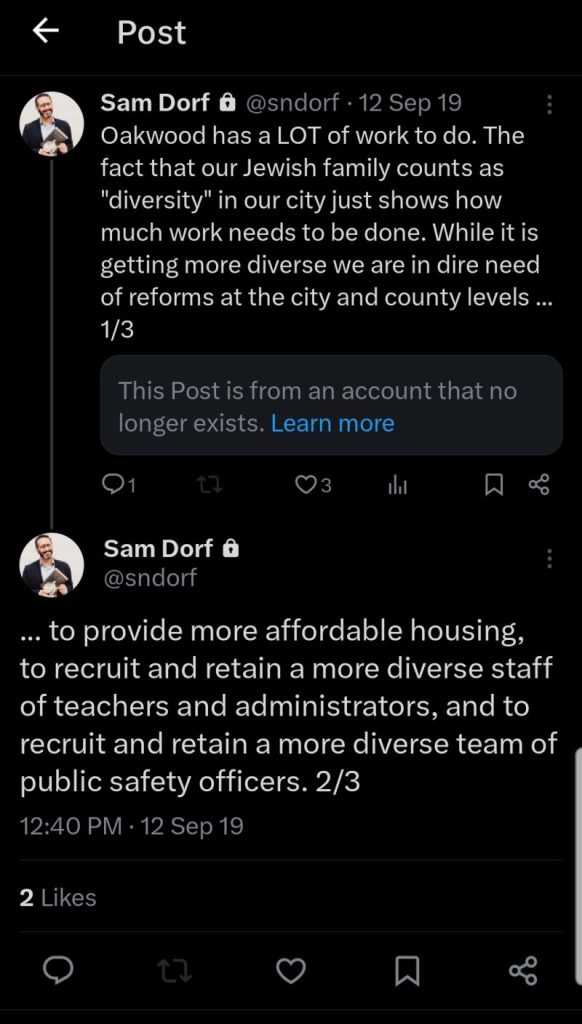
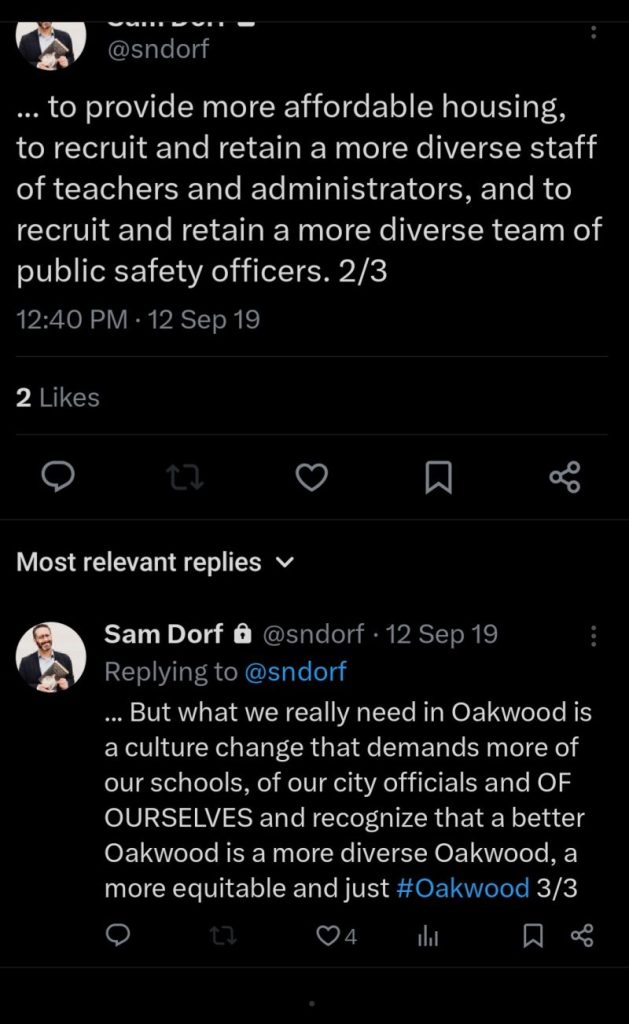
However well intended this idea may be, Oakwood is simply not designed for significant levels of this type of housing. Adding more of it here would likely bring in more congestion, more crime, possibly strain Oakwood’s schools, and lower our property values. Online crime maps show areas with this type of housing have higher crime rates, including around Oakwood (for example, see here). Oakwood residents living near existing low income housing have already reported problems with loitering, vagrants, drug paraphernalia and litter in and around those properties.
Now, the City Council election is in full swing, and one of the major issues in the election is addressing the vacant buildings and overall conditions in the shops of Oakwood. Mr. Dorf’s latest idea for expanding this type of housing is to bring it right into this very area the City is trying to revitalize. He recently proposed the following solution on his campaign Facebook page: converting vacant buildings to community resident-owned, non-profit businesses that sidestep “traditional access to capital”, with “affordable” rental housing right above them:
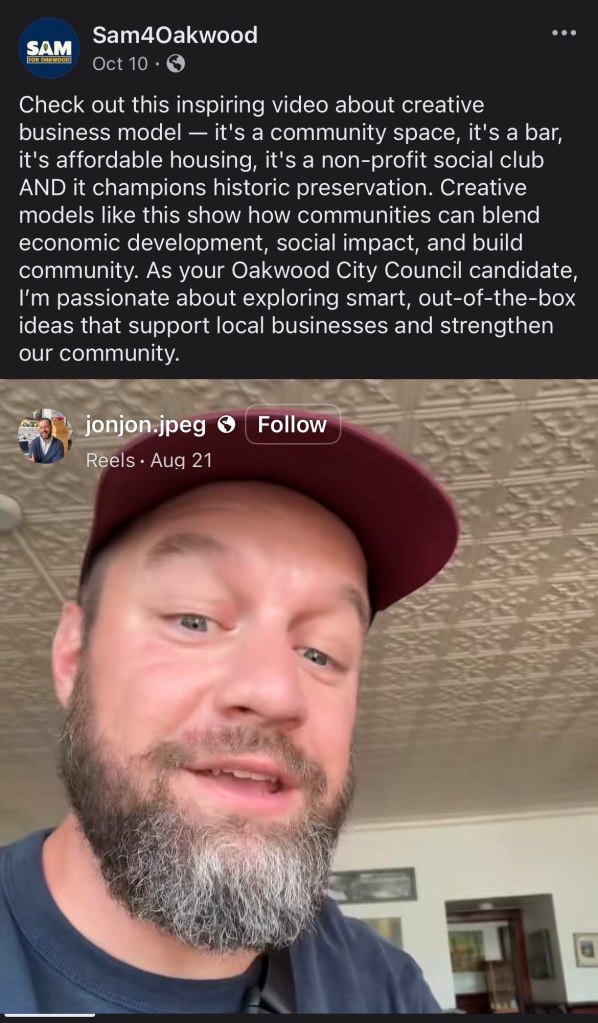
The video featured in his post can be viewed here.
Oakwood shops property owners have already struggled to bring in new businesses to their vacant stores and office spaces. Business owners have indicated one of the main reasons is the high rent, which owners must charge to cover Oakwood’s high property costs and taxes in that area. Another problem is restrictive zoning, which would have to be radically altered to allow housing in the shops area. One has to wonder how avoiding larger investors and relying on residents buying shares into a non-profit would raise enough funds to make Mr. Dorf’s proposal feasible, and whether the City would appreciate the loss of tax revenue that could otherwise be generated from for-profit businesses.
But the larger concern is the impact of having residential tenants living above the shops and offices, especially low-income or even subsidized tenants if that is part of the plan. How many business owners would appreciate having the commotion of families with infants or small children, wild parties or altercations, or a leaking shower or toilet right above their restaurant, store, salon or professional office? How would they like to have any of the more serious problems described above, which Oakwood residents have already seen with some of this housing, in or around their business properties? How many customers, or residents living near the shops area, would like more of those problems?
This sort of collectivist approach to improving Oakwood’s commercial district may look appealing from the ivory-towered vacuum of academia. But for real world business owners, that, together with Oakwood’s high rent and zoning issues, would be one more compelling reason to set up shop elsewhere. And for businesses already here, it would be one more reason to leave. In short, Mr. Dorf’s idea of injecting low-income housing in Oakwood’s commercial district would likely exacerbate its decline by driving away business and investment, and it could prove to be one of the worst things to happen to the district, to Oakwood’s economy and to the City as a whole.
Oakwood needs City Council members with more sensible approaches to this issue – approaches that are better attuned to the needs and concerns of businesses and residents, and to economic realities.
 OCSS
OCSS 