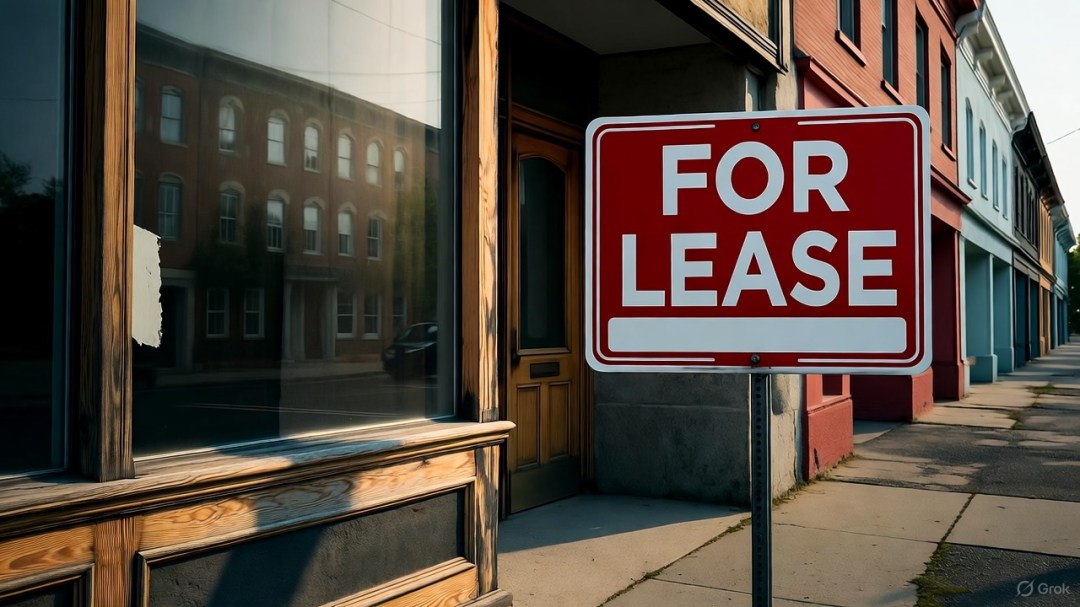
“We should collaborate with landlords to explore a vacancy tax on chronically empty storefronts” – Sam Dorf in the Oct 22, 2025, edition of the Oakwood Register
Oakwood residents, as we approach the city council election, it’s crucial to scrutinize the proposals put forward by candidates like Sam Dorf. As a left-wing activist with a vocal online following, Dorf has advocated for a vacancy tax on empty storefronts in our shopping and business district — a policy he frames as a solution to our community’s limited growth opportunities. While this may sound like a progressive fix to encourage leasing and revitalize our “pocket community,” a closer look reveals it as a risky, one-size-fits-all approach that ignores the realities of our small, well-maintained town with its older housing stock and modest business ecosystem. Drawing from experiences in other cities and economic analyses, this proposal could lead to unintended consequences that exacerbate our challenges rather than resolve them. Let’s examine why Dorf’s stance on this issue raises serious questions about his suitability for council.
Dorf’s advocacy for a vacancy tax stems from a desire to penalize property owners for unoccupied spaces, ostensibly to spur quicker rentals or sales. However, in a low-demand area like Oakwood, where empty storefronts reflect broader issues like e-commerce shifts and limited local foot traffic, this policy doesn’t address root causes. Rather, it piles additional financial burdens on owners already grappling with maintenance, taxes, and insurance costs. As seen in places like Oakland and Los Angeles, such taxes have led to increased defaults and foreclosures, with property values plummeting and owners forced to sell at losses. For Oakwood’s modest business district, this could mean fewer investors willing to step in, deepening the cycle of vacancy rather than breaking it.
Consider the deterrence to economic growth: A vacancy tax signals to potential investors that Oakwood is hostile to property ownership, especially when leasing can take 12-24 months due to marketing, negotiations, and costly tenant improvements—often exceeding $200,000 for a mid-sized space. In high-demand markets, this might work, but in our small community with little room for expansion, it risks scaring away the very capital needed for renovations or new ventures. Dorf’s left-leaning activism overlooks these market realities, prioritizing punitive measures over incentives like grants or zoning reforms that could genuinely attract businesses.
Worse still, this policy could accelerate an urban “doom loop” in our tight-knit town. By adding fees without boosting demand, it may lead to neglected properties, falling values, reduced city revenues, and even heightened crime—issues that hit small communities like ours hardest. Nationwide data reveals nearly one-third of office loans in distress, with cities like Chicago seeing over 75% affected, illustrating how such burdens shrink markets and limit options. In Oakwood, where our well-kept homes and limited commercial space define our charm, Dorf’s proposal threatens to undermine the vibrancy we cherish, potentially straining resources for essential services like schools and safety.
The inequities are stark: Smaller property owners, including low-income or minority individuals, bear the brunt, facing unaffordable penalties that force abandonment. Surviving landlords might pass costs to tenants via higher rents, making it tougher for local small businesses to thrive—leading to mismatched leases and more failures down the line. Oakwood’s limited resources should focus on proactive growth strategies, not punitive approaches.
Parents, teachers, students, and community members: Sam Dorf’s push for a vacancy tax exemplifies a pattern of ideological activism that prioritizes broad-stroke penalties over practical, community-tailored solutions. In light of his candidacy, this stance highlights a disconnect from Oakwood’s unique needs—a small town with old-world charm but real constraints on expansion. We can’t afford policies that risk further emptying our streets. Instead, let’s support approaches that foster investment and preserve our way of life.
If you’re concerned, join the discussion on our Facebook page for updates and stay informed ahead of the election. Oakwood deserves leaders who protect, not penalize, our local economy. Make sure to vote!
 OCSS
OCSS 